Monkey Sanctuary Trust is a unique environmental charity dedicated to:
Woolly Monkey - what is it?
The woolly monkey (lagothrix lagothricha) is one of the largest and most beautiful of the South American primates. They live in the middle and upper Amazon basin to the west of the rivers Negro and Tapajos. There are four recognised sub-species of woolly monkey. These are mountain or long-haired woolly monkey (lagothrix lagothricha lugens), the brown woolly monkey (lagothrix lagothricha poepiggii), the grey woolly monkey (lagothrix lagothricha cana) and the brown-headed woolly monkey (lagothrix lagothricha lagothricha).
Woolly monkeys are arboreal (meaning tree-dwelling), spending most of their time high in the canopy of the trees and rarely venturing to the forest floor.
Woolly monkeys have evolved in a way which enables them to exploit this tree-top niche, to travel easily along narrow limbs, to reach nuts, seedpods and fruits at the end of branches, to leap between gaps safely and even to sleep securely 150 feet above the ground.
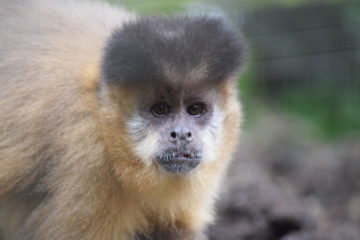
Capuchin Monkey - what is it?
Capuchins were named after capuchin monks because the dark fur that forms a cap on their heads and extends down in 'side-burns' resembles the cowl or headdress of the capuchin priests.
Capuchin monkeys are one of the most intelligent and adaptable of all South American primates. The first capuchins (Cebus species) appeared 16.3 million years ago in South America and, like all monkeys capuchin monkeys share about 97% of their DNA with humans. All capuchin species are neotropical, in other words capuchin monkeys are mainly found in northern and central South America. Within this range only the howler monkey is as widespread, and the black-capped capuchin or tufted capuchin has the widest distribution of any new world monkey, as capuchin monkeys are found in every South American country except Uruguay and Chile.
Monkey Sanctuary Trust is based at The Monkey Sanctuary in Looe, Cornwall, UK. The Monkey Sanctuary is home to a social colony of Woolly monkeys and a group of rescued ex-pet Capuchin monkeys. The Trust provides advice and support for primate, woolly and capuchin monkey rescue centres and sanctuaries around the world.
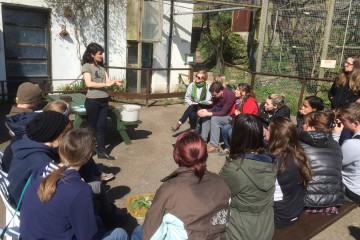
Each year the Monkey Sanctuary Trust educates thousands of visitors on monkey life in the wild and in captivity, on the ethics and problems of captivity for woolly monkeys, about ideas for rehabilitation as well as other animal welfare and conservation issues for woolly and capuchin monkeys.
Monkey Sanctuary Trust Home page
The Monkey Sanctuary Trust's Work
History of the Monkey Sanctuary
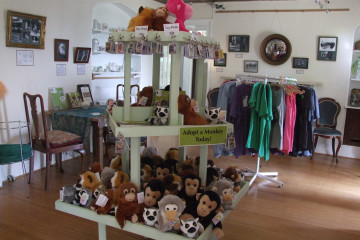
Adopt a woolly or capuchin Monkey
International Adoptions of capuchin monkeys
Volunteer to help the Monkay Sanctuary
Become a woolly monkey Keeper for the Day
The Bats that live alongside the woolly monkeys
Woolly monkey Rehabilitation Programme
Wildzone - all about capuchins and woollies
Monkey Rehabilitation Programme
Monkey Sanctuary Visits and Talks
Monkey Sanctuary - Educational Resources
Latest News and Campaigns about monkeys
| STOP THE PRIMATE PET TRADE CAMPAIGN | |
![]() |
It is currently legal to keep a primate as a pet in the UK. There are up to 12,000 pet monkeys, at present in the UK alone. read more... |
| ADOPT A MONKEY | |
![]() |
Adopt a monkey and help us provide a safe home for monkeys that need our care, as well as rescue centres, education and conservation projects around the world. adopt now... |
| VISITOR INFORMATION | WILDZONE | |
![]() |
![]() |
|
| COME VISIT US | KIDS' WILDZONE |
The Monkey Sanctuary Trust has changed its name!We are pleased to announce that Wild Futures is the new name for The Monkey Sanctuary Trust; a change which reflects our charity’s growing influence in the world of conservation, education and primate welfare. With over 45 years’ experience which has led to us becoming a leader in our field, we would like to invite you to join us in the next stage of our growth. The Monkey Sanctuary site will continue to open its doors to visitors every year and care for its ever-expanding group of monkey residents. We will be updating this website shortly to focus on the solely on the Sanctuary, and to make it as user friendly as possible for those of you that would like to pay us a visit during our open season from Easter through to the end of September. If you would like to find out about the parent charity's wider work, please visit our new website www.wildfutures.org, where you can learn about our overseas support, our extensive education programme and UK conservation efforts, amongst other exciting areas of our work. Got Facebook? Become a fan of Wild Futures and keep up-to-date with our work! Click HERE to visit our page.
|
| LATEST NEWS | SHOP | |||
| January 2010 Wild Futures has a job opening for a Cafe Co-Manager and a Fundraising Administrator more details .... |
|